Table of Contents
Lavender Features: More Than Meets the Eye
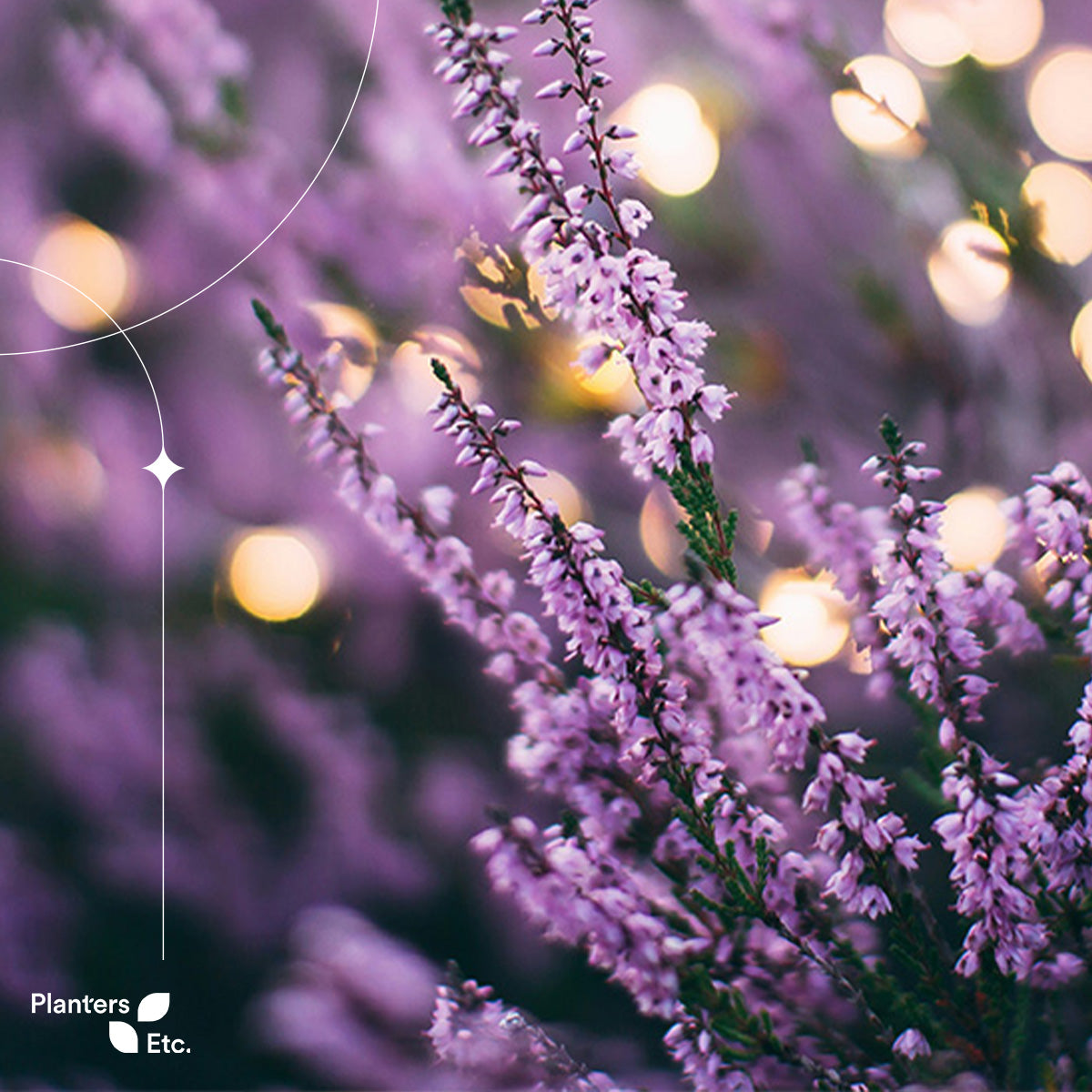
Understanding Lavender’s attributes helps you place and use it effectively.
Foliage:
Many popular varieties sport slender, grey-green or silvery leaves. Run your hands over them – the foliage itself is often aromatic. It provides consistent texture even when flowers fade.
Flowers:
The iconic feature. Spikes dense with small flowers rise above the foliage. Colors typically range from deep violet and blue to softer lilacs, pinks, and even white, depending on the chosen cultivar. The main bloom happens in summer.
Form:
Most Lavenders grow into rounded mounds or small, tidy shrubs. Mature size varies considerably by type. Some stay a compact 1 foot tall and wide. Others reach up to 3 feet. Plan accordingly.
Fragrance:
Lavender’s signature scent comes from both flowers and foliage. It’s a key element in sensory gardens. Place plants where passersby might brush the leaves to release the aroma.
Uses:
Landscape: Create stunning borders, mass plantings for drifts of color, or incorporate into rock gardens and low-water xeriscapes. Plant near outdoor living areas.
Containers: Lavender adapts well to life in pots and planters. This allows precise control over its critical soil drainage needs. Perfect for patios, balconies, sunny windowsills (with caution), and defining entryways.
Culinary: Flowers of English Lavender (Lavandula angustifolia) find their way into sugars, baked goods, and beverages. A little goes a long way.
Aromatic/Crafts: Dried flower spikes retain their scent for potpourri, sachets, sleep pillows, and everlasting arrangements.
Find Planters Perfect for Fragrant Herbs
Inspired by Lavender’s potential? Explore Planters Etc’s durable fiberglass planters. Find the ideal container to showcase aromatic plants on your patio or entryway.
Planting Conditions & Essential Maintenance
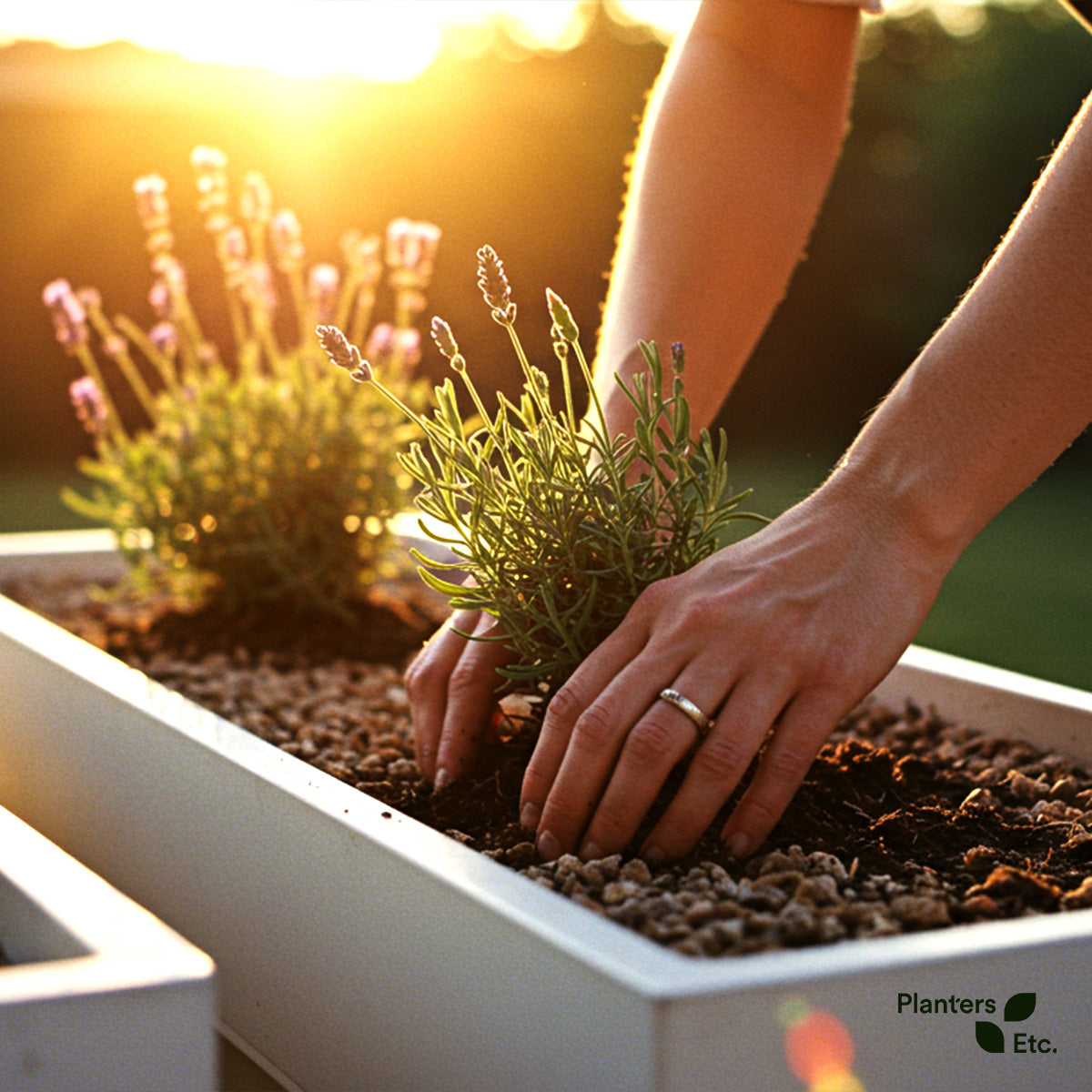
Lavender has specific needs. Meet them, and it rewards you. Ignore them, and disappointment follows. Root rot is the main enemy.
Light:
Give Lavender what it craves – full, direct sun. Aim for a minimum of 6 to 8 hours daily. Less sun means fewer flowers and weaker, stretched growth. A sun-drenched spot is non-negotiable for proper lavender care.
Soil:
Drainage, drainage, drainage. Lavender roots abhor constantly wet conditions. Think arid Mediterranean hillside, not soggy lawn. Use a fast-draining substrate. Amend standard potting mixes with sand, gravel, or perlite for containers. Avoid heavy soils or rich composts that hold too much moisture. Slightly alkaline soil is preferred.
Watering:
Less is more, once established. Water new transplants regularly to help roots settle in. For mature plants, let the soil dry out completely between deep waterings. Check the soil moisture 1-2 inches down before reaching for the hose. Overwatering invites root rot faster than almost any other mistake, especially in humid Florida conditions.
Temperature & Humidity:
Dry heat is Lavender’s friend. High humidity, common in areas like Fort Lauderdale, increases fungal disease risk. Ensure good air circulation around each plant. Space them adequately. While English Lavender prefers moderate climates, Spanish (Lavandula stoechas) and French (Lavandula dentata) types may tolerate heat slightly better, provided drainage is impeccable. Check specific cultivar hardiness if you experience freezing temperatures.
Maintenance Routine:
Pruning: Provide Lavender annual pruning after its main flowering show concludes. Cut back stems by about one-third to one-half. This maintains a compact shape and prevents the base becoming overly woody and bare over time. Avoid cutting into old wood that has no visible leaves. A light trim in early spring can tidy up winter damage.
Deadheading: Snip off faded flower spikes right after they bloom. This neatens the plant and may encourage a second, smaller flush of flowers on some varieties.
Mature Size: Know your cultivar. Plan for its eventual 1-to-3-foot height and spread. Choose your planter with this mature size in mind.
Location: Primarily an outdoor plant. Its high light requirements make successful long-term indoor growing difficult without supplemental high-intensity grow lights and excellent air movement.
Best Planter Choices for Happy Lavender
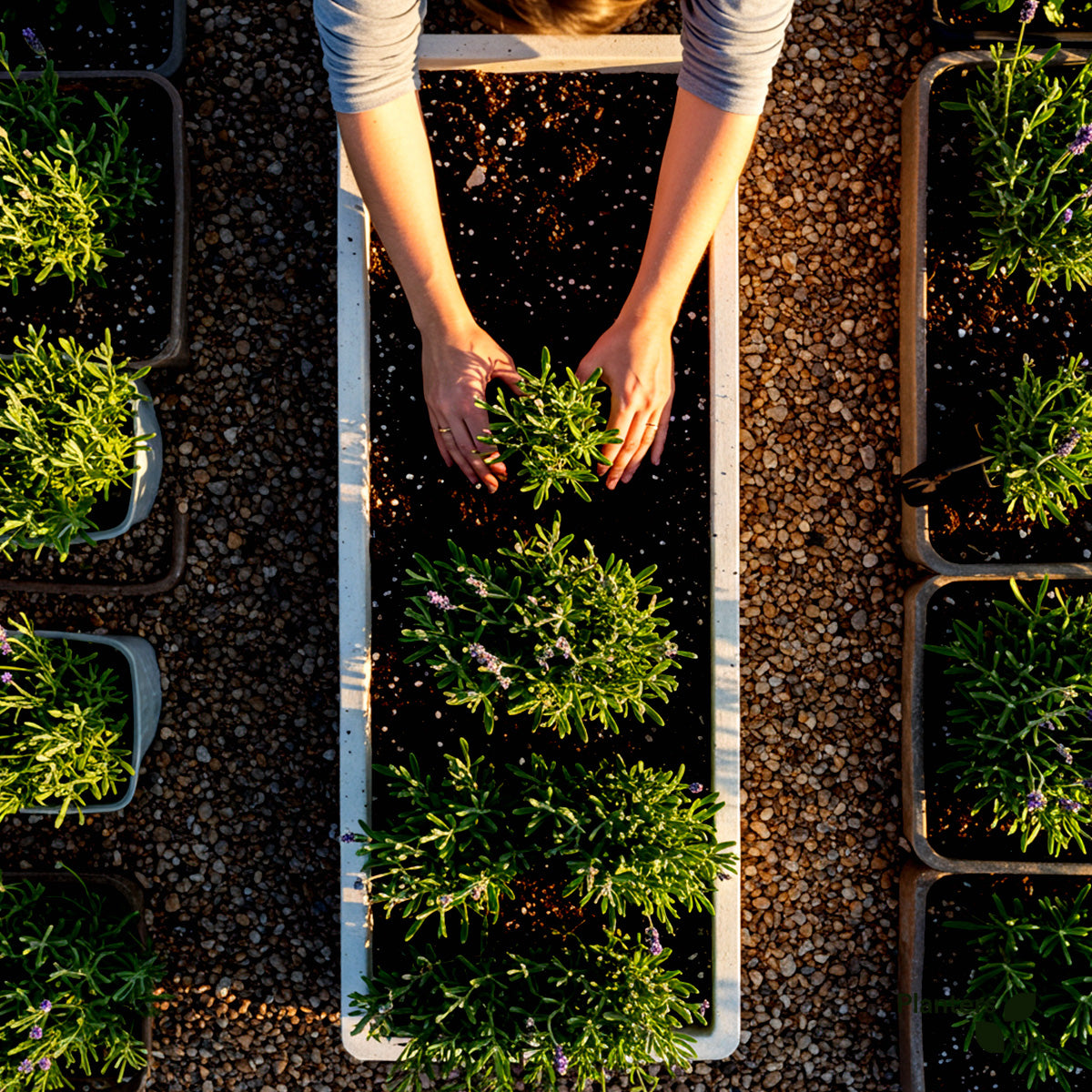
The right container is crucial for Lavender’s health and your design’s success.
Drainage Focus:
Select planters with multiple, unobstructed drainage holes. PlantersEtc ships containers with drainage holes drilled upon request, ensuring water can escape. Consider using pot saucers to lift planters slightly, guaranteeing drainage pathways remain clear, available upon request.
Material Advantages:
Planters Etc high-quality fiberglass planters are an excellent match for Lavender.
Moisture Control: Unlike porous terracotta which can stay damp, fiberglass does not retain excess moisture, supporting the well-drained conditions Lavender needs.
Temperature Moderation: Fiberglass insulates roots better than thin plastic or metal, offering protection from scorching summer heat and potential winter chills.
Durability: Built to withstand year-round weather – sun, rain, temperature swings – without cracking or fading like lesser materials. A long-term home for your plant.
Aesthetic Quality: Each planter is handcrafted, reflecting care and quality. They provide the sophisticated look of stone or ceramic without the excessive weight.
Size & Shape Considerations:
Give the root system room to breathe. Avoid overly deep, narrow pots.
- Wider, slightly shallower containers like the Casablanca Round Planter Bowl mimic Lavender’s natural preference for spreading roots in well-aerated soil.
- Use rectangular planters like the Cuba Rectangular Planter or the Antwerp Wide Rectangular Planter to create fragrant Lavender borders along patio edges or walkways.
- Classic forms such as the Corry Cylinder Planter or the tapered silhouette of the Valencia Tapered Planter provide timeless elegance. Choose neutral colors – whites, greys, charcoals – available from Planters Etc to make the silvery foliage and purple flowers pop.
Design Ideas with Lavender Planters
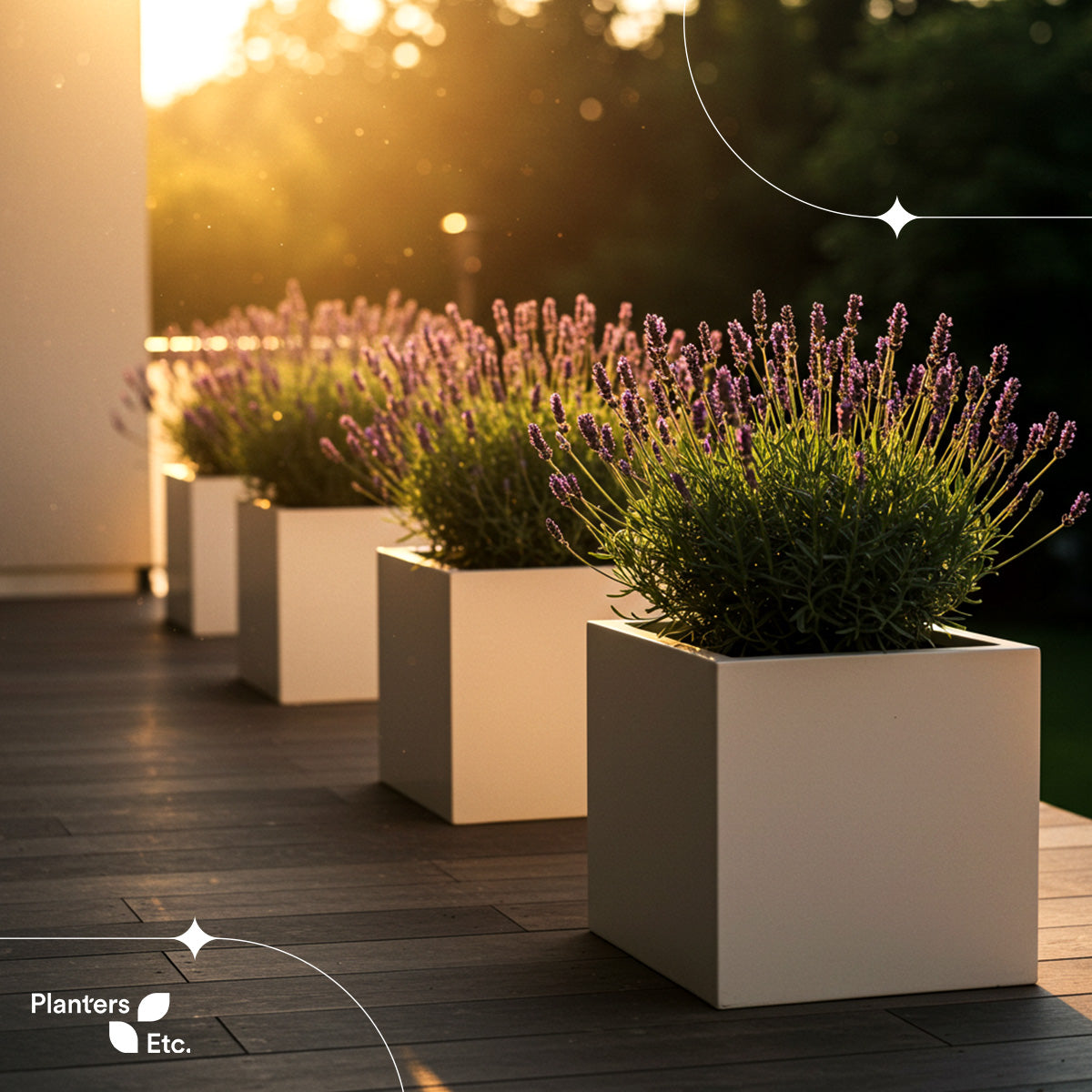
- A trio of Lavender plants in matching Montroy Cube Planters creates a modern, fragrant grouping.
- Line a sunny path with narrow rectangular planters filled solely with Lavender for a formal yet sensory experience.
- Combine Lavender with other drought-loving herbs like Rosemary and Thyme in a large statement planter like the Bara Jar Round Planter for a Mediterranean feel.
Select Your Ideal Lavender Planter
Ready to plant? Browse Planters Etc’s extensive collection. Find durable, beautiful fiberglass planters in shapes and sizes perfect for showcasing your Lavender.
Life Cycle & What to Expect
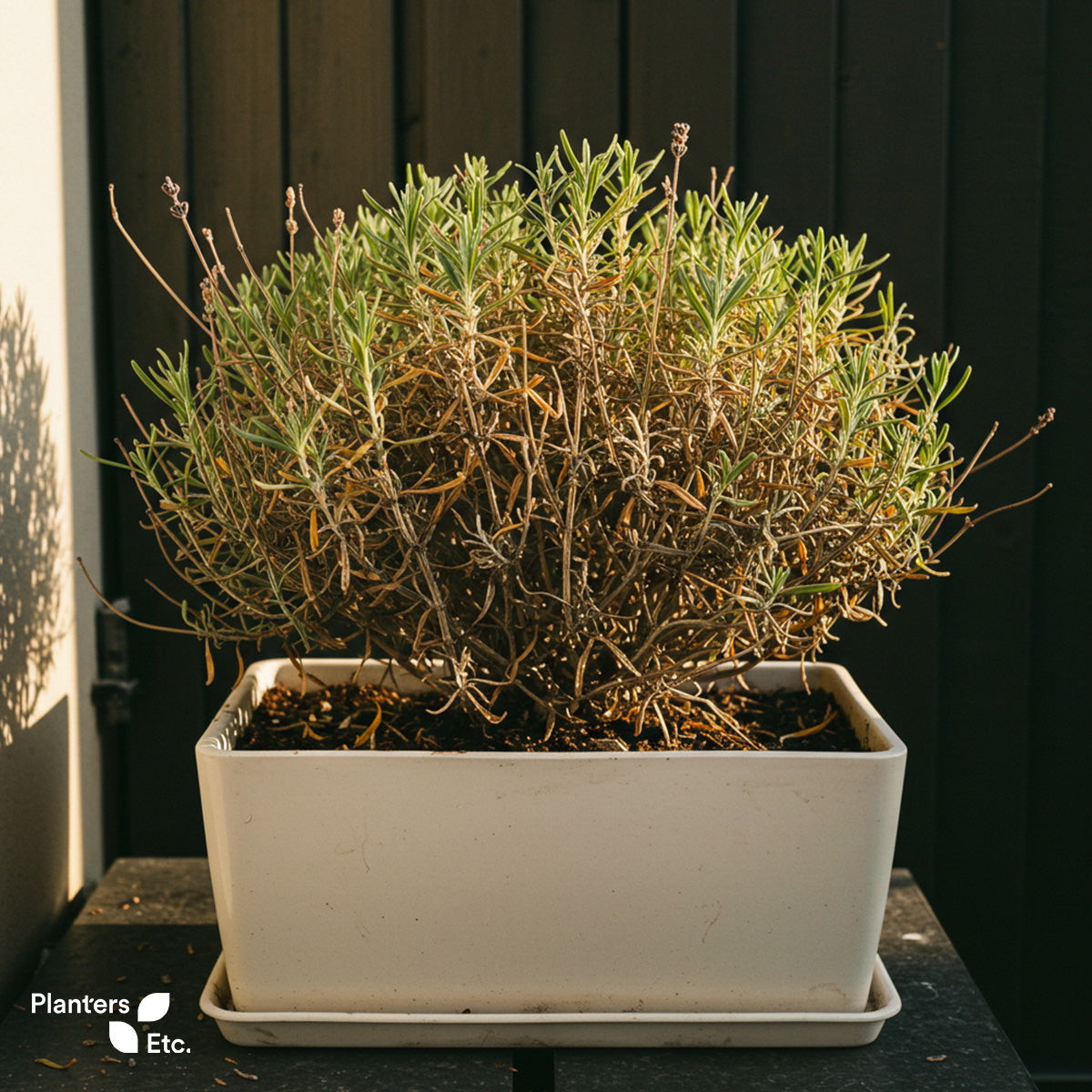
Lavender offers multi-season interest when cared for properly.
Seasonality:
The main event is the summer bloom. Deadheading might bring sporadic later flowers. The silvery foliage remains attractive year-round. In milder climates (like Zone 10+), Lavender might not go fully dormant, but growth will slow considerably during cooler, shorter days.
Lifespan:
A healthy Lavender plant can thrive for 5-10 years, potentially longer under optimal conditions. Plants naturally become woody with age. If the center looks bare and flowering diminishes despite good care, it might be time for replacement. Humid conditions or poor drainage significantly shorten lifespan.
Reproduction/Propagation:
Expand your Lavender stock easily. Take softwood cuttings (healthy, non-flowering stem tips) in late spring or early summer. Root them in a very well-draining mix. Growing from seed is possible but slower, and cultivars may not grow true to type.
Growth Journey:
Young plants prioritize establishing roots. Expect more vigorous flowering from the second or third year onward. Consistent annual pruning is the key to preventing a woody, unproductive center as the plant ages. Enjoy the fragrance and beauty through its established life.
Creating the Perfect Spot for Lavender
Creating the perfect spot for Lavender involves understanding its needs and providing the right foundation. With full sun, superb drainage, and mindful watering, your Lavender can flourish. Pairing it with a high-quality, durable PlantersEtc fiberglass planter ensures both plant health and lasting style for your garden, patio, or balcony project. Explore our planter collections and other plant care guides on PlantersEtc.com to continue building your ideal green space.
Frequently Asked Questions (FAQ)
How much sun does lavender need?
Lavender requires full, direct sun exposure, ideally 6 to 8 hours per day, for optimal growth and flowering.
What is the most important factor in lavender care?
Excellent drainage is arguably the most critical factor. Lavender roots are highly susceptible to rot if left in constantly wet soil. Use a fast-draining soil mix and ensure planters have adequate drainage holes.
How often should I water lavender in a planter?
Water thoroughly only when the soil has dried out completely. Check the top 1-2 inches. Overwatering is a common mistake. Frequency depends on weather and planter size, but less is generally more once established.
When should I prune lavender?
The main pruning should be done after the primary summer flowering period. Cut back stems by about one-third to one-half to maintain shape and prevent excessive woodiness. Avoid cutting into old, leafless wood.
Can lavender survive winter in a planter?
It depends on the lavender variety’s hardiness zone and your climate. English lavender is hardier than Spanish or French. In colder zones, planters offer less insulation than the ground. You might need to move planters to a sheltered location or provide winter protection. Fiberglass planters offer better insulation than thin plastic or metal.
Why is my lavender getting woody at the base?
This is natural aging for lavender. Consistent annual pruning helps slow this process and keeps the plant more compact and productive. If it becomes too woody and sparse, it might be time to replace the plant.
Grow Beautiful Lavender with the Right Foundation!
Ensure your lavender thrives with perfect drainage and style. Explore our collection of durable fiberglass planters designed for plant health and lasting beauty.