SHIPPING INCLUDED ON ALL ORDERS | 10% OFF FIRST-TIME ORDERS | USE CODE "PLANTER10"
How to Plant and Care for Hibiscus | The Full Planters Etc. Guide
Hibiscus brings instant tropical flair wherever it grows. With its large, stunning flowers, this plant transforms patios, balconies, and poolside areas into vibrant retreats. Particularly well-suited to container life in warm climates like Fort Lauderdale, Hibiscus offers designers and home gardeners a showstopper element. Achieving that continuous display requires understanding its needs. This guide covers Hibiscus care from selection to long-term health.
Hibiscus Features: Bold and Beautiful
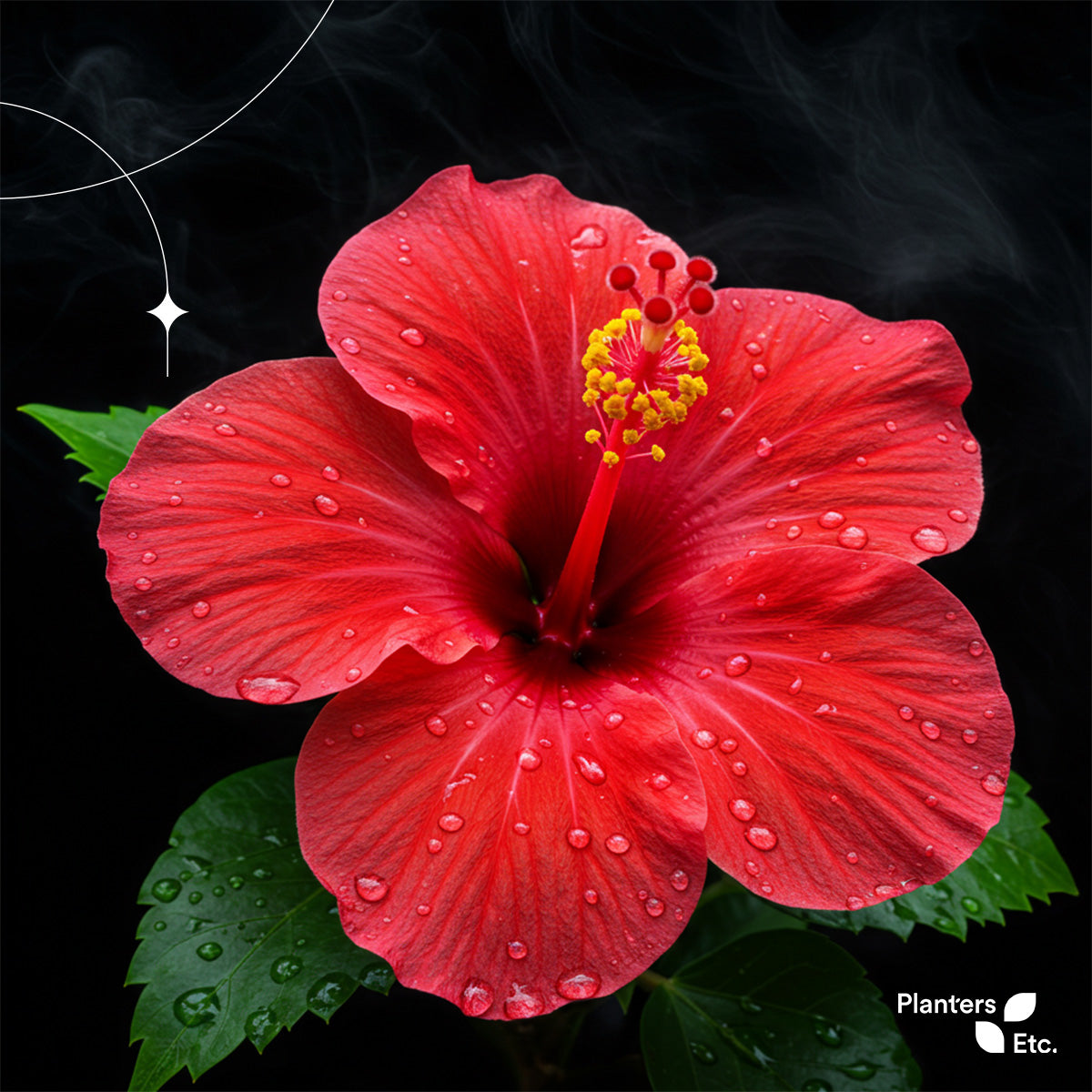
Hibiscus boasts large, showy flowers and lush foliage for a tropical feel.
Knowing Hibiscus traits allows for effective placement and appreciation.
Flowers:
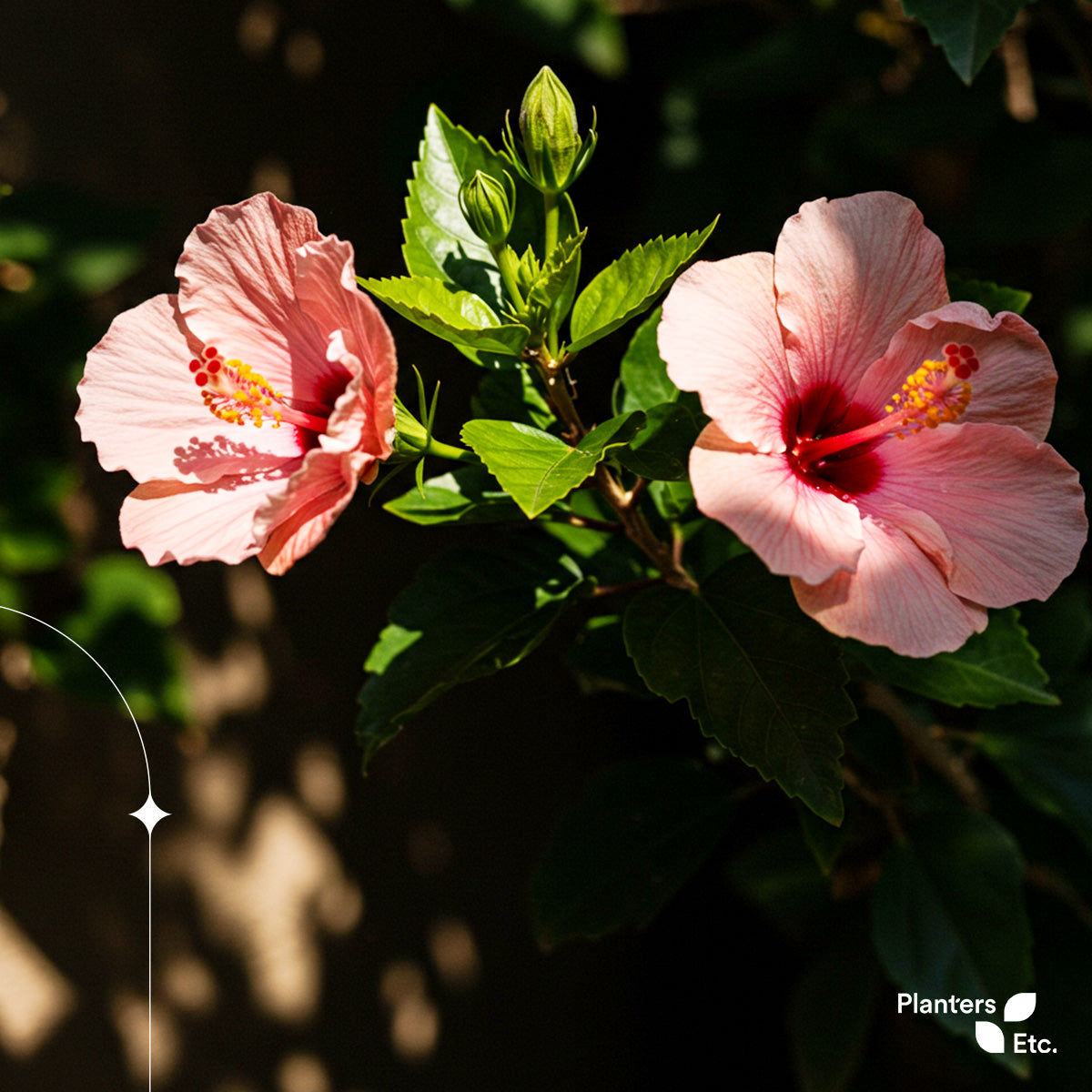
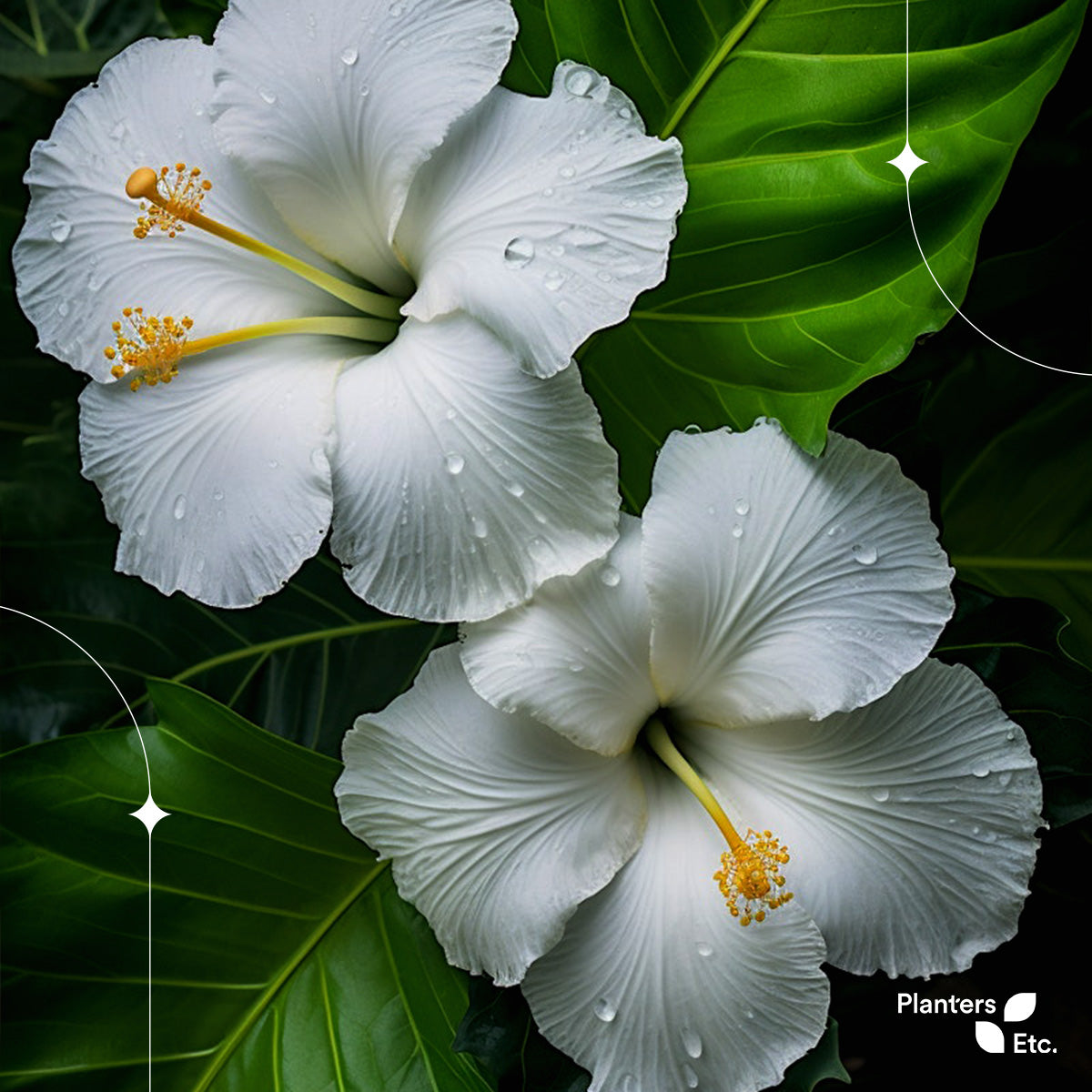
The main attraction. Large, often saucer-sized blooms typically feature five petals around a prominent central stamen. Colors explode in reds, pinks, oranges, yellows, whites, and combinations thereof. Most common Tropical Hibiscus (Hibiscus rosa-sinensis) flowers last only a day or two, but healthy plants produce them profusely.
Foliage:
Usually glossy, deep green leaves provide a lush backdrop for the bright flowers. Leaf shape can vary slightly between cultivars.
Form:
Cultivated Hibiscus range from compact, bushy shrubs under 3 feet tall to larger specimens reaching 6-10 feet or more if not pruned. Growth habit is generally upright and branching.
Fragrance:
Most popular Tropical Hibiscus varieties offer little to no scent. Their appeal is purely visual.
Uses:
Specimen Plant: A single, well-grown Hibiscus in a striking planter commands attention.
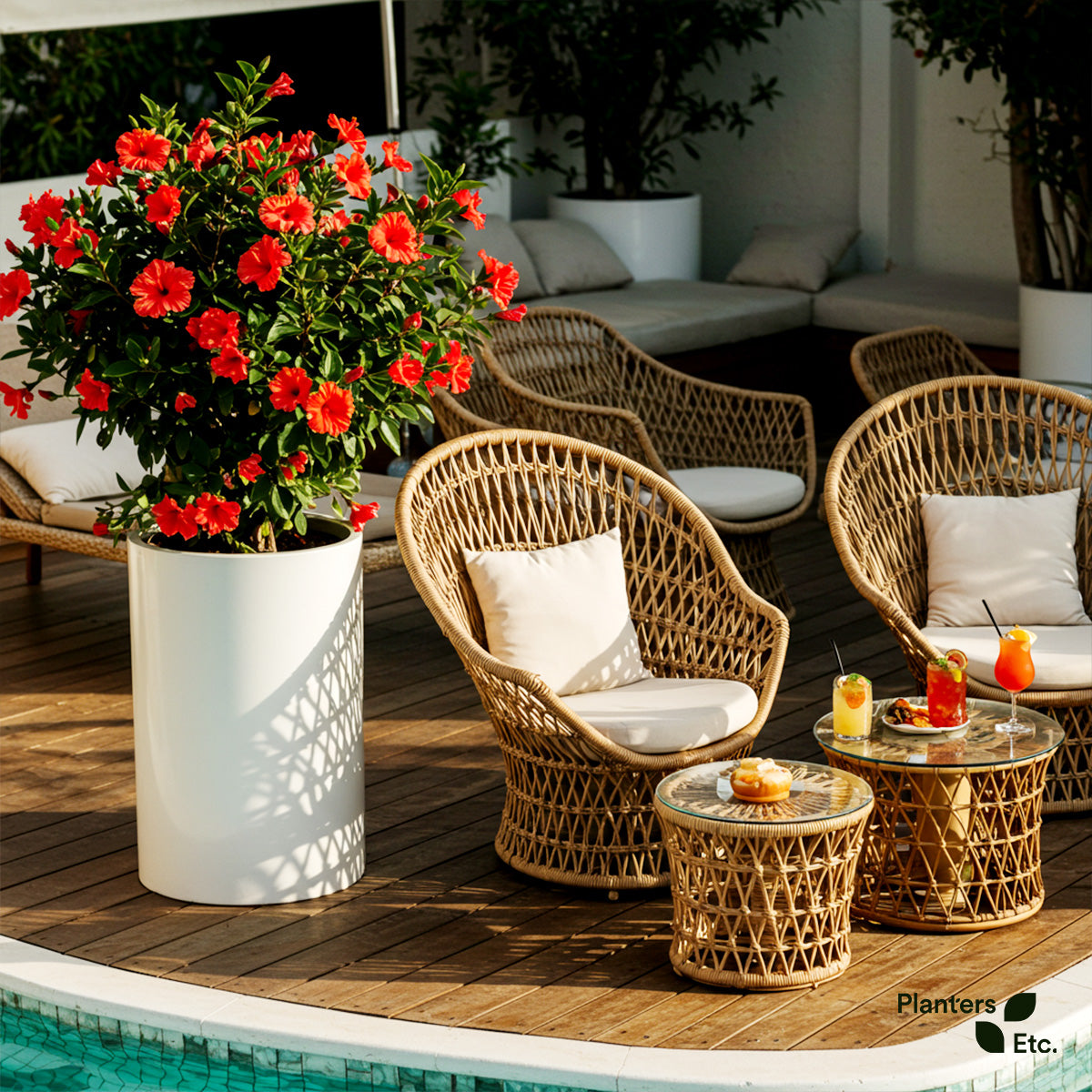
Tropical Ambiance: Essential for creating a lush, resort feel around pools, patios, and lanais.
Screening: Larger varieties planted in a row of rectangular planters can form informal flowering hedges.
Containers: Excellent for large pots and planters, allowing mobility and controlled conditions.
Indoor Potential: Can be overwintered indoors in colder climates with very bright light, though performance is usually best outdoors.
Explore Planters for Tropical Statements
Want to add tropical drama? Discover PlantersEtc’s collection of durable fiberglass planters. Find the perfect size and style to showcase your vibrant Hibiscus.
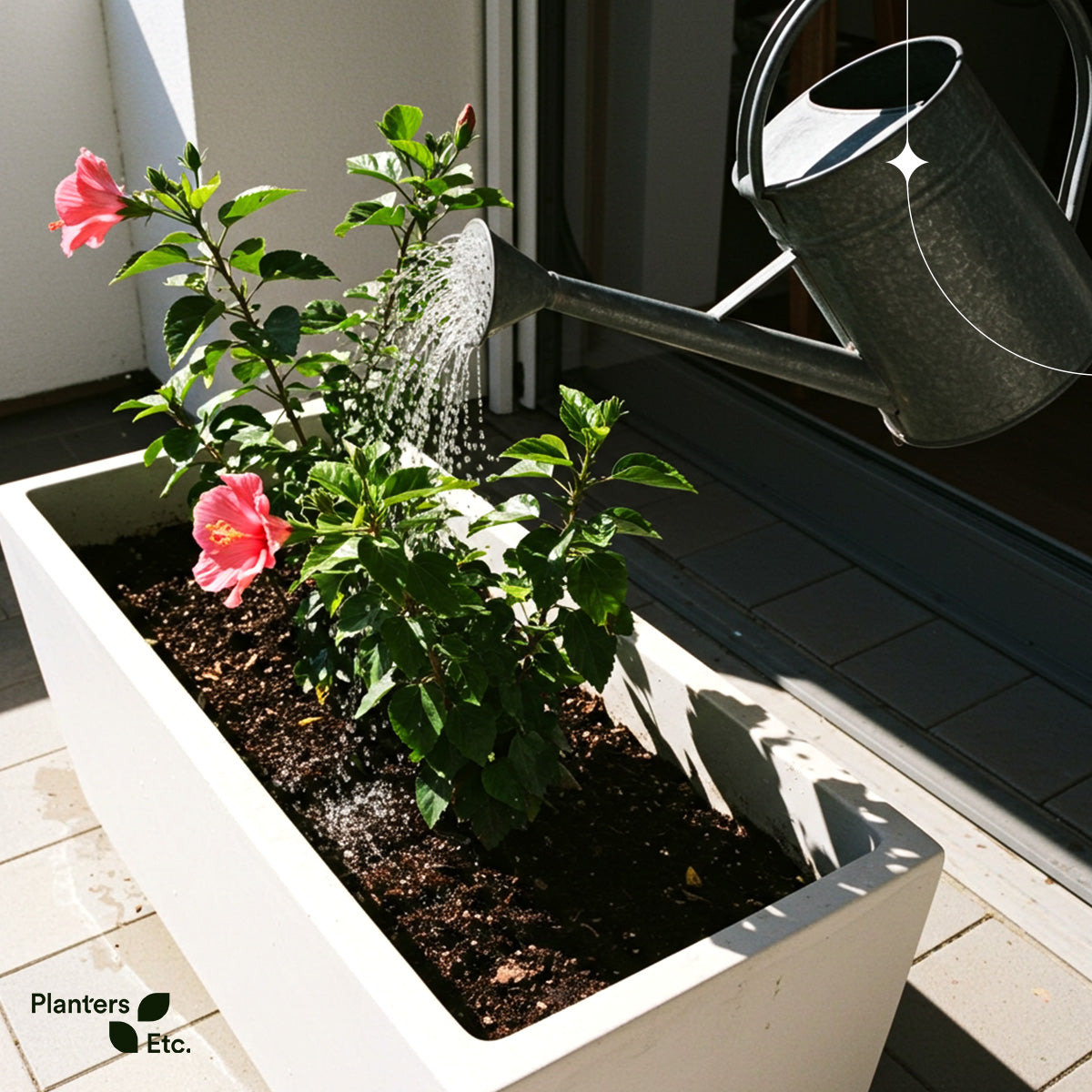
Consistent watering and feeding are key to abundant hibiscus blooms.
Hibiscus plants are generous bloomers, but they expect good service in return. They are heavy feeders and drinkers.
Light:
Full sun is paramount for maximum flower production. Provide at least 6-8 hours of direct sunlight daily. Less light results in fewer blooms.
Soil:
Needs a well-draining yet fertile and slightly acidic potting mix. Good drainage prevents root rot. Rich organic matter helps retain moisture and nutrients. Amend standard potting mixes with compost if needed, but ensure perlite or similar materials maintain drainage.
Watering:
Requires consistent moisture. Soil should remain evenly moist, like a well-wrung sponge, but not waterlogged. Check the top inch of soil; water thoroughly when it starts to feel dry. Container Hibiscus, especially in Florida’s heat, may need daily watering during peak summer. Reduce frequency slightly in cooler weather. Never let it dry out completely.
Temperature & Humidity:
Thrives in warmth and humidity typical of tropical and subtropical zones (like Fort Lauderdale). Protect from temperatures below 50°F (10°C); frost is damaging. High humidity is generally well-tolerated.
Feeding:
Hibiscus are heavy feeders. During the active growing season (spring through fall, or nearly year-round in South Florida), fertilize regularly. Use a balanced liquid fertilizer every 1-2 weeks or a slow-release fertilizer formulated for blooming plants according to package directions. Look for fertilizers slightly higher in potassium for better blooms.
Maintenance:
Pruning: Prune to shape the plant, encourage bushier growth, and stimulate flowering. Prune lightly in early spring. Remove dead or crossing branches anytime. Harder pruning can rejuvenate older plants but may delay flowering.
Pest Control: Be vigilant. Aphids, spider mites, whiteflies, and mealybugs favor Hibiscus. Inspect plants often, especially leaf undersides and new growth. Use insecticidal soap, neem oil, or horticultural oil sprays at the first sign of trouble. Good air circulation helps.
Mature Size: Varies greatly by cultivar. Select a variety appropriate for your space and planter size, ranging from 2-3 foot dwarfs to 10+ foot standards.
Location: Ideal for outdoor patios, balconies, and gardens in warm climates. Can be moved indoors for winter in colder zones but requires the sunniest spot available and careful watering.
Best Planter Choices for Thriving Hibiscus
Fiberglass planters provide insulation and moisture control for heat-loving hibiscus.
The right planter supports Hibiscus’s needs and enhances its dramatic presence.
Size Matters:
Provide ample root space. Choose a substantial planter to accommodate the root system and provide stability, especially for taller varieties susceptible to wind. A larger soil volume also helps maintain consistent moisture. Consider planters like the Hayden Round Planter or the spacious Tarragona Bowl Planter.
Drainage is Critical:
Ensure excellent drainage with multiple holes. Waterlogged soil quickly leads to root problems. PlantersEtc provides necessary drainage holes upon request.
Material Benefits:
PlantersEtc fiberglass planters are well-suited for Hibiscus, particularly in hot climates:
Heat Protection: Fiberglass insulates the root zone from extreme heat radiating off hard surfaces, reducing stress compared to dark plastic or metal pots.
Moisture Retention: Less porous than terracotta, helping maintain the consistent moisture Hibiscus needs, while still allowing excess water to drain.
Durability & Style: Withstands year-round weather exposure without degrading. The high-quality, handcrafted finishes provide a sophisticated look, complementing the plant’s beauty. Available in many colors to match or contrast with flowers.
Design Approaches with Hibiscus Planters
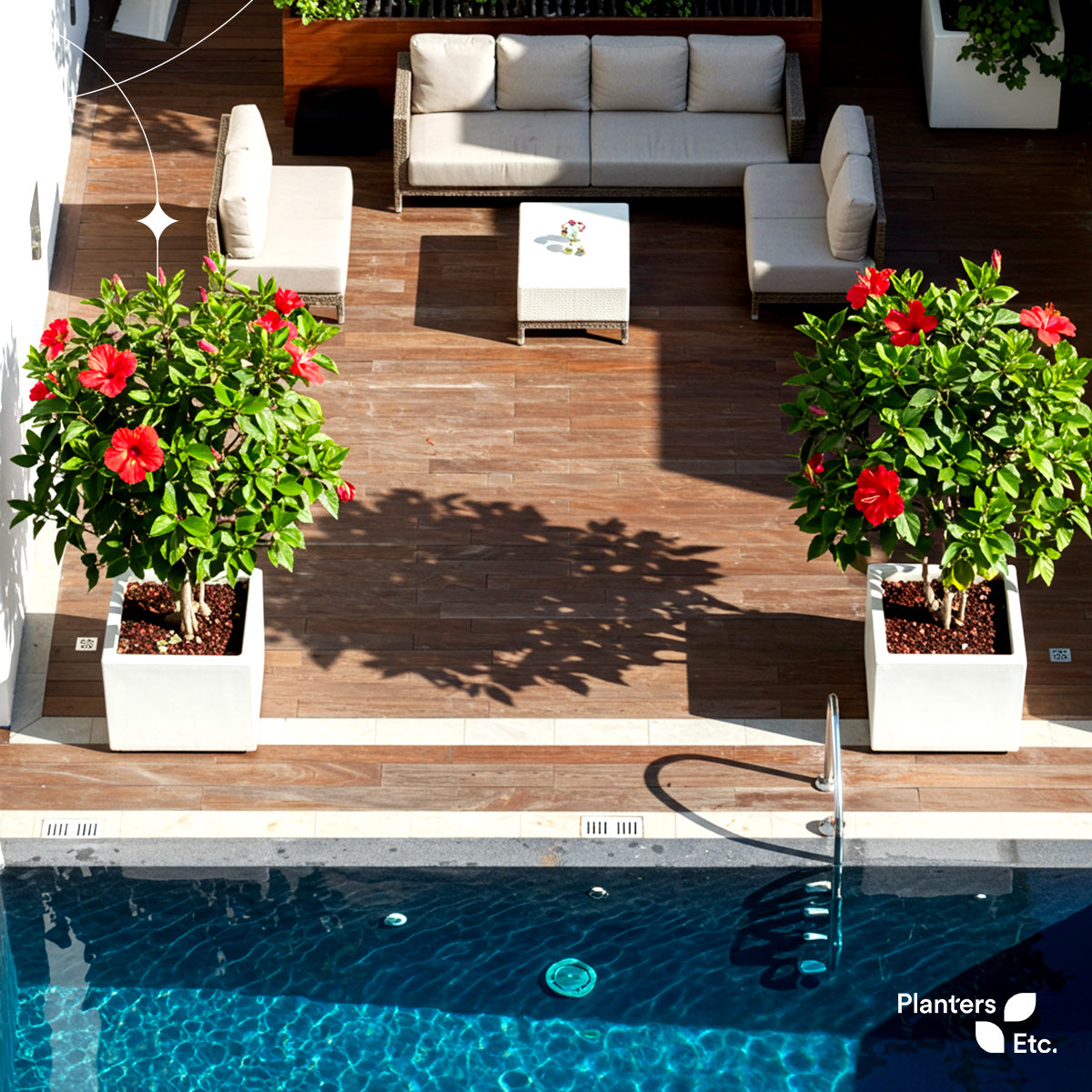
Use large hibiscus planters as focal points or to create symmetrical designs.
Use large, simple planters like the Corry Cylinder Planter or Montroy Square Planter in neutral tones (white, charcoal, black from Planters Etc’s options) to let the vibrant Hibiscus flowers take center stage.
Place matching Hibiscus planters symmetrically to frame an entryway or pool deck.
Group different Hibiscus varieties in large coordinating planters for a diverse color display.
Choose a planter color that complements a specific flower hue – a deep blue planter for a yellow Hibiscus, perhaps.
Shop Large Planters for Specimen Plants
Need a substantial planter for your Hibiscus? Browse large fiberglass options atPlanters Etc, combining durability, style, and the space your plant needs to flourish.
With proper care, hibiscus can bloom nearly year-round in warm climates.
Hibiscus offers long-term beauty with attentive care.
Seasonality:
In tropical climates like South Florida, Hibiscus can bloom almost continuously year-round, especially with consistent warmth, sun, water, and feeding. In slightly cooler areas or during shorter winter days, flowering may pause or slow. Where winters are cold, it acts as a summer annual unless brought indoors.
Lifespan:
As a perennial shrub, Hibiscus can live for many years, even decades, in suitable climates with good care. Regular pruning helps maintain vigor.
Reproduction/Propagation:
Easily propagated from softwood or semi-hardwood cuttings taken during warmer months. Root them in water or a moist potting medium.
Potential Issues:
Expect to manage pests periodically. Bud drop (flowers falling off before opening) can occur due to stress from sudden changes in watering, temperature, or light. Consistency is key.
Growth Journey:
Young plants establish quickly. Regular feeding fuels growth and flowering. Pruning directs energy into producing more branches and thus more potential blooms. Enjoy a near-constant supply of spectacular flowers during the warm season with proper upkeep.
Achieving Stunning Hibiscus Displays
Hibiscus demands attention, but the reward is a stunning, tropical display. Providing full sun, consistent water and nutrients, diligent pest management, and the right foundation in a durable, appropriately sized PlantersEtc fiberglass planter sets the stage for season after season of breathtaking blooms. Explore the diverse planter styles and informative guides at PlantersEtc.com to create your own vibrant patio paradise.
Frequently Asked Questions (FAQ)
How much sun does hibiscus need to bloom?
Hibiscus needs full sun, at least 6-8 hours of direct sunlight daily, to produce the maximum number of flowers.
How often should I water my hibiscus in a planter?
Hibiscus requires consistently moist soil. Check the top inch of soil daily, especially in hot weather. Water thoroughly when it starts to feel dry. Container plants may need watering every day during peak summer in warm climates.
What fertilizer is best for hibiscus?
Use a balanced liquid fertilizer regularly (e.g., every 1-2 weeks) during the growing season, or a slow-release fertilizer formulated for blooming plants. Fertilizers slightly higher in potassium (the last number in N-P-K) can encourage more blooms.
Why are my hibiscus buds falling off before opening?
Bud drop is usually caused by stress due to sudden changes in watering (too much or too little), temperature fluctuations, insufficient light, or pest infestations. Maintaining consistent care is key to preventing it.
When and how should I prune hibiscus?
Prune lightly in early spring to shape the plant and encourage bushiness. You can remove dead or crossing branches anytime. Avoid heavy pruning during the main blooming season if you want continuous flowers.
Can I grow hibiscus indoors?
Yes, hibiscus can be overwintered indoors in colder climates, but it needs a very bright, sunny location (like a south-facing window) and careful watering to survive. Expect fewer blooms indoors compared to outdoors.
Create Your Tropical Oasis with Hibiscus!
Ready to bring vibrant, show-stopping flowers to your patio or garden? Find the perfect large, durable fiberglass planter to showcase your hibiscus.