Creating a butterfly oasis at home is more than just a charming idea—it’s a way to bring nature’s beauty closer while supporting an essential part of our ecosystem. Butterflies don’t just add a whimsical touch to your garden or patio—they are pollinators, playing a vital role in plant reproduction and biodiversity. By designing a space filled with nectar-rich flowers and strategically placing planters, you can turn even the smallest balcony, patio, or courtyard into a thriving haven for these colorful visitors.
Whether you’re working with a large backyard or a narrow urban terrace, thoughtfully grouping planters allows you to attract butterflies, support their lifecycle, and enjoy the movement and life they bring. You don’t need sprawling acreage to create impact—just a few well-chosen plants, smart placement, and the right planters from PlantersEtc.com can help you build a pollinator-friendly space that’s both functional and beautiful.
This guide covers the best nectar-rich flowers for planters, explains how to create a concentrated feeding station using grouped containers, and highlights why fiberglass planters are a perfect match for outdoor butterfly-friendly environments. We’ll also touch on the butterfly life cycle and how your setup can provide shelter, food, and the right conditions for these pollinators to thrive.
Table of Contents
Nectar-Rich Flowers That Butterflies Love
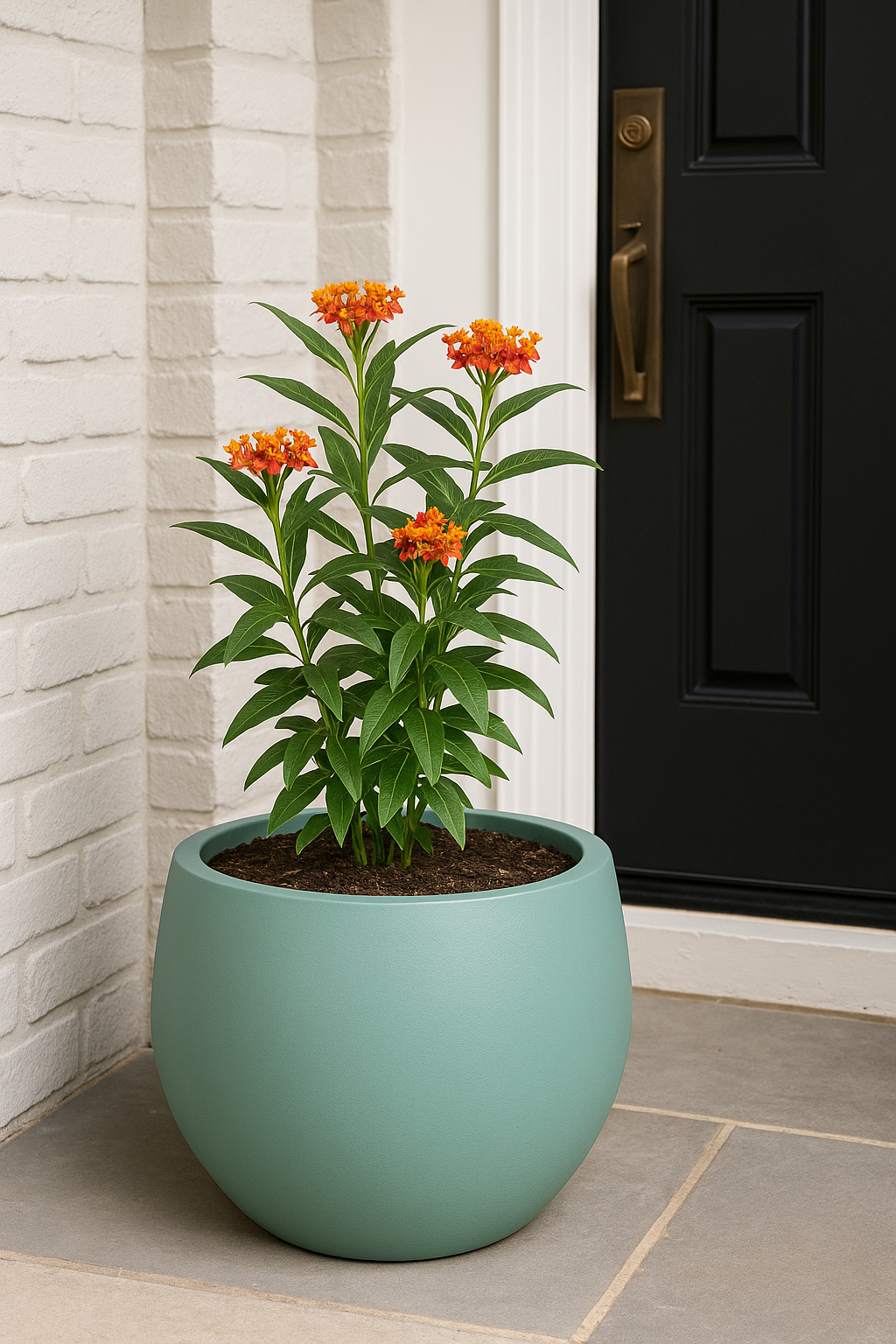
Butterflies are drawn to bright, fragrant flowers with rich nectar supplies. Some of the top-performing varieties that thrive in planters include:
- Milkweed (Asclepias): The essential host plant for monarchs.
- Bee Balm (Monarda): Known for its tubular red, pink, or purple flowers.
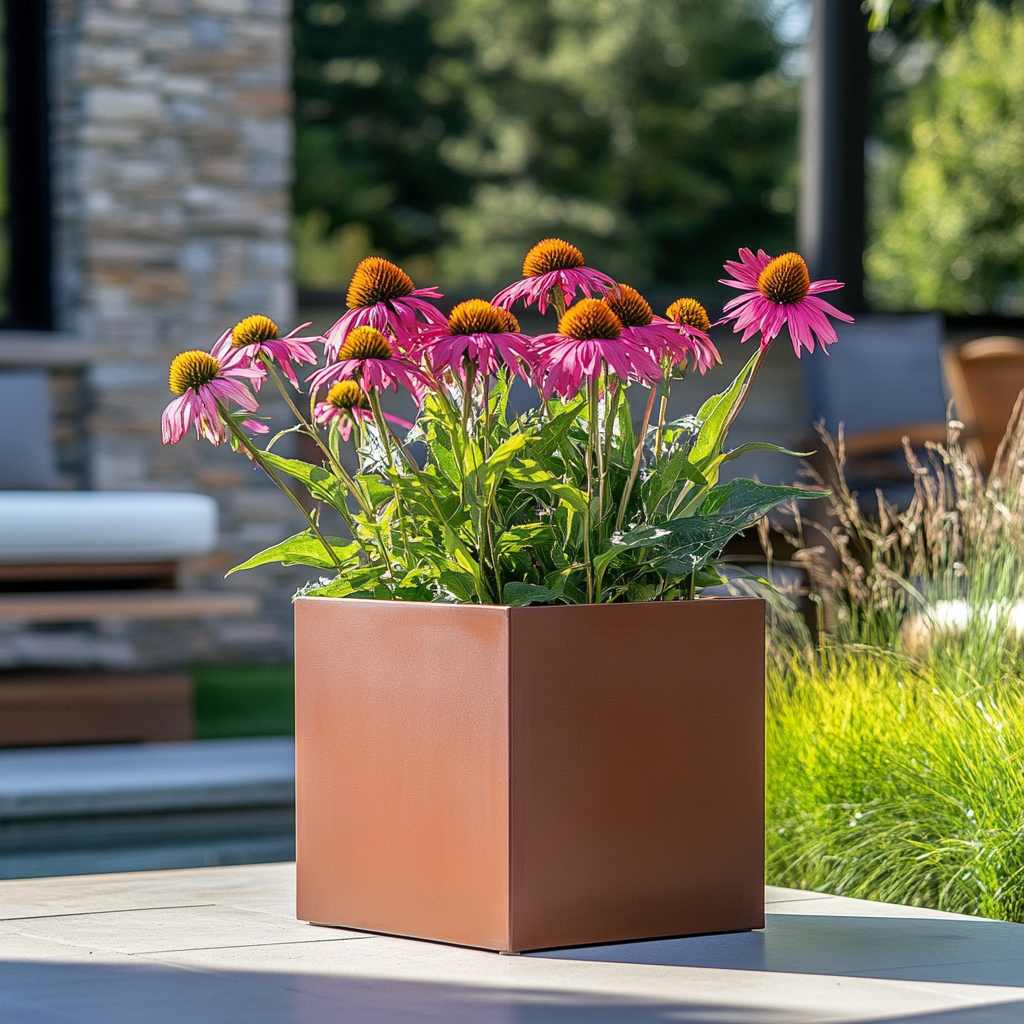
- Coneflower (Echinacea): Easy to grow and blooms for months.
- Salvia: Long-blooming and drought-tolerant, ideal for fiberglass planters.
- Lantana: Loved for its rainbow-colored flower clusters and resilience.
Why Create a Concentrated Butterfly Feeding Station?
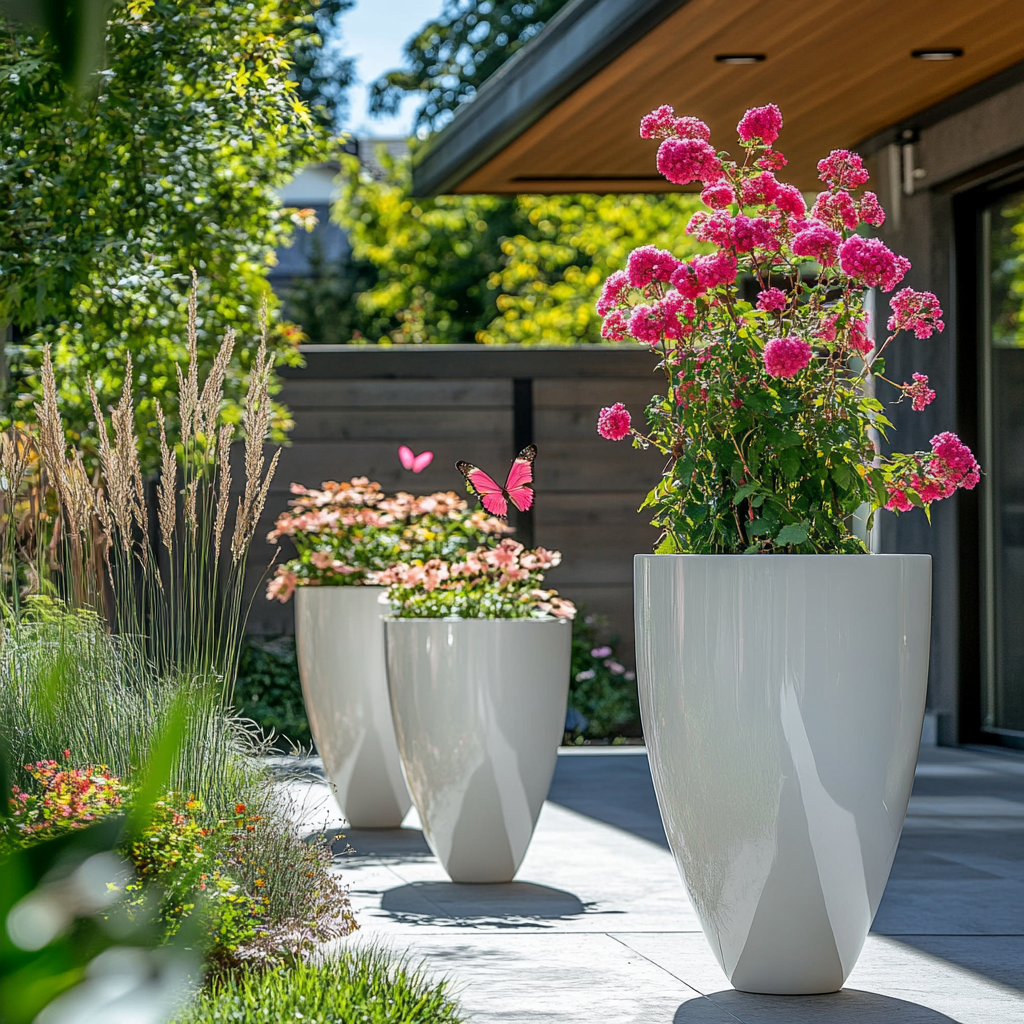
When it comes to attracting butterflies, scattered plants can help—but a concentrated feeding station made up of grouped nectar-rich planters creates a far more powerful magnet for these winged visitors. By arranging planters in clusters, you mimic how butterflies find flowers in nature: in dense, visible patches that promise energy-rich nectar. This setup not only increases the number of butterfly visits but encourages longer stays, more frequent feeding, and repeat visits over time.
Butterflies are visual creatures, drawn to color, warmth, and scent. Grouping brightly blooming flowers in planters such as the Valencia or Selenge creates an eye-catching, elevated display that’s easy for them to spot. It also makes your patio or garden visually stunning. You’re not just planting flowers—you’re building a destination.
There are also practical advantages. Grouping planters in one sunny area allows you to control watering more easily, keep plants in optimal light conditions, and even protect more delicate species from wind or excessive sun exposure. You can rotate or swap planters as seasons change, always keeping the display fresh and in bloom.
Ecologically, concentrated nectar stations offer much-needed consistency. Habitat loss has made it harder for butterflies to find food sources, especially in cities. A grouped collection of planters filled with blooms like zinnias, milkweed, coneflowers, and salvia can be a reliable fuel stop for butterflies on the move. Add in native plants where possible, and you’ve created not just a pretty feature—but a genuine support system for your local pollinators.
Why do Fiberglass Planters Make a Difference?
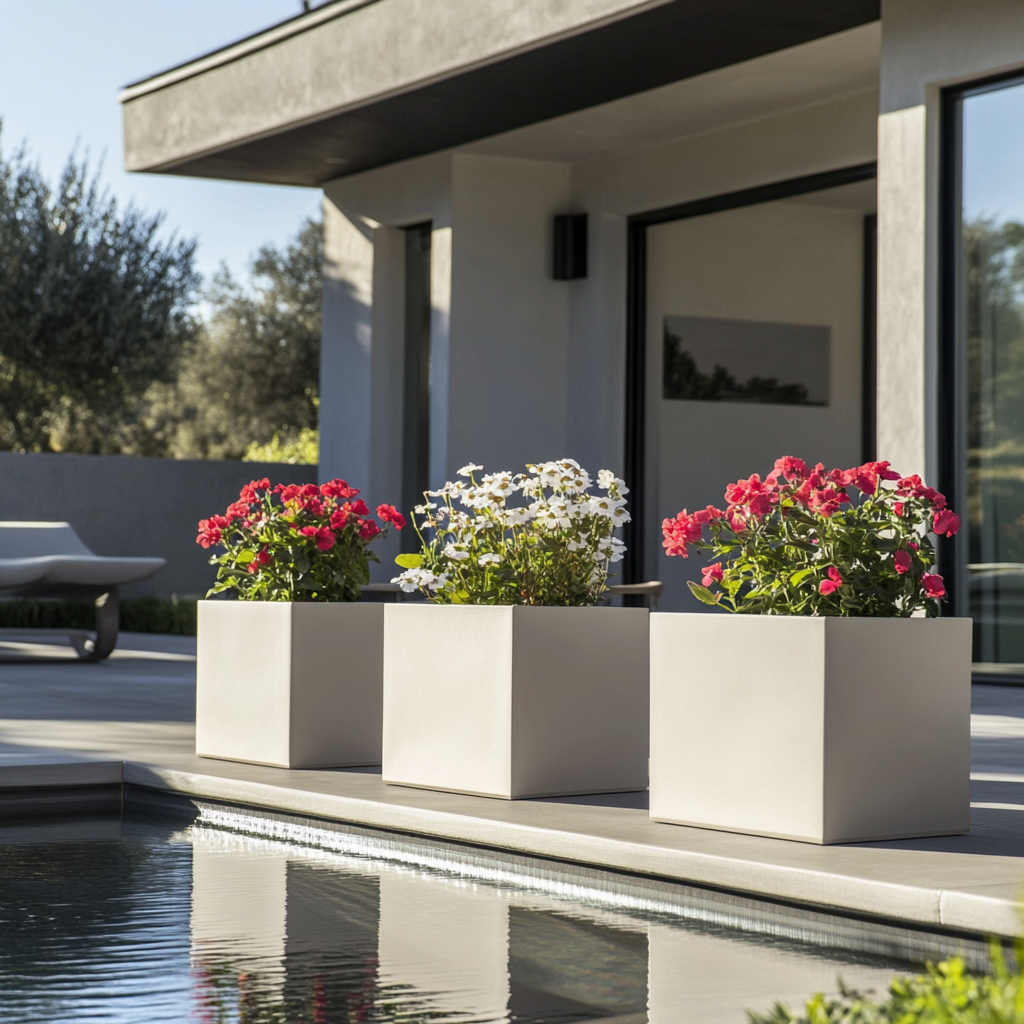
Compared to plastic or clay pots, fiberglass planters are better suited for supporting pollinator gardens because they:
- Resist cracking and fading in direct sun or heavy rain.
- Provide insulation to protect plant roots through changing temperatures.
- Are lightweight enough to rearrange seasonally for optimal sun exposure.
- Come in modern finishes that enhance the beauty of your butterfly sanctuary.
Understanding the Butterfly Life Cycle
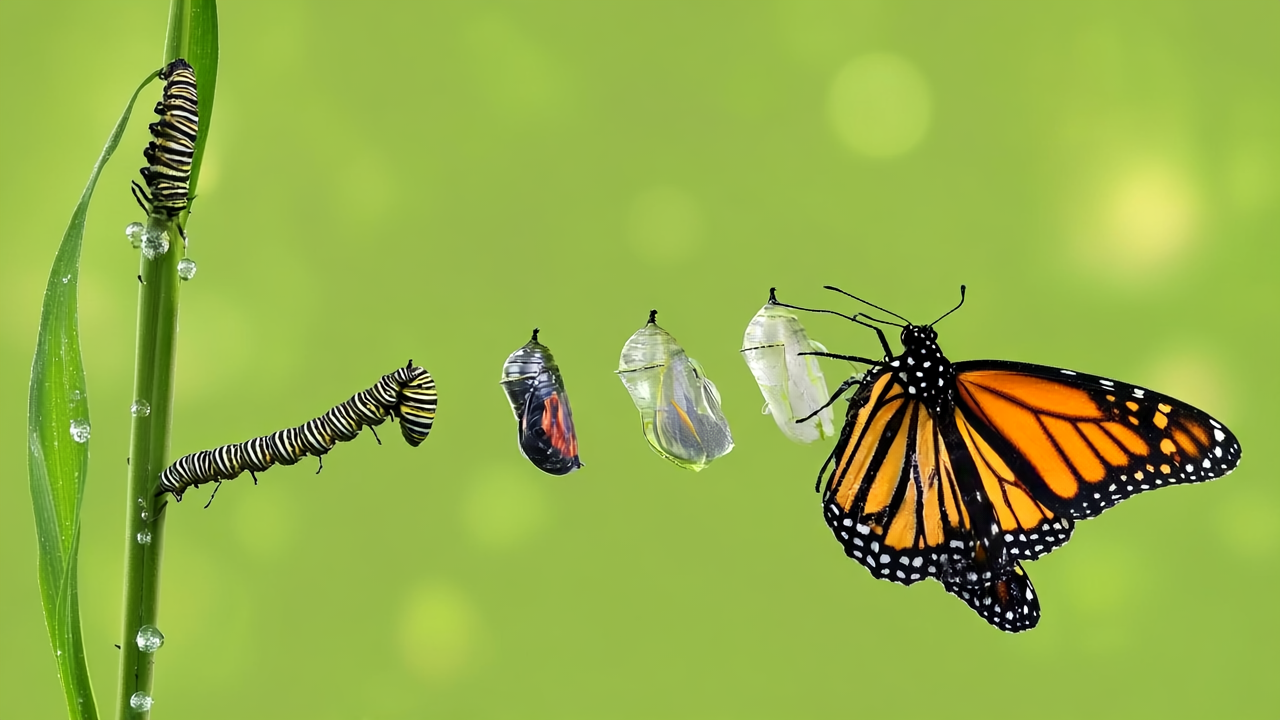
Butterflies start as eggs, grow into caterpillars, form chrysalises, and finally emerge as butterflies. Having host plants (like milkweed for monarchs) is just as important as nectar plants. Creating a space where butterflies can feed, rest, and even lay eggs is critical for supporting these pollinators long term.
According to the Xerces Society, over 90% of flowering plants rely on pollinators like butterflies. Planting nectar-rich species in planters doesn’t just add beauty – it actively supports biodiversity.
Shop Butterfly-Friendly Planters
Design your own butterfly oasis with durable, beautiful fiberglass planters from Planters Etc. Browse collections perfect for creating layered gardens and feeding stations.
Frequently Asked Questions (FAQ)
What are the best flowers for butterflies in containers?
Milkweed, bee balm, coneflowers, lantana, and salvia all thrive in planters and attract various butterfly species.
Do I need to include host plants?
Yes! Host plants like milkweed provide a place for butterflies to lay eggs and feed caterpillars, which is essential to completing their life cycle.
How much sun do butterfly-friendly plants need?
Most nectar-rich flowers require full sun (6+ hours daily) to bloom profusely and attract butterflies.
Why use fiberglass planters instead of plastic?
Fiberglass planters are more durable, fade-resistant, stylish, and provide better root insulation than most plastic pots.